
















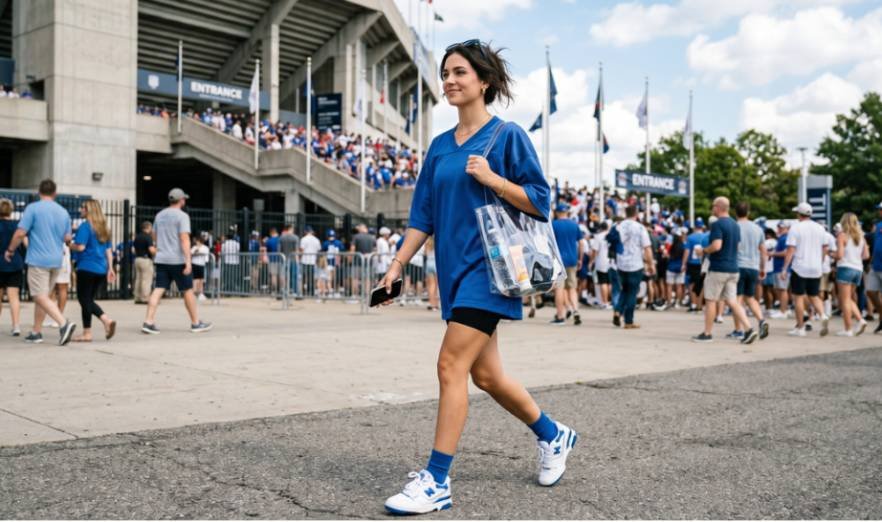





I know how good it feels to wear a fresh jersey on game day. The colors look bright, the numbers look sharp, and the fabric feels clean and comfortable. But after a few washes, many jerseys start to fade, stretch, peel, or smell less fresh. That usually happens because sports jerseys are treated like regular T-shirts, even though they need much gentler care.
Learning how to keep sports jerseys looking new is not difficult. You only need the right washing habits, drying method, stain treatment, and storage routine. Whether you wear football, basketball, baseball, hockey, or soccer jerseys, the goal is the same: protect the fabric, logos, numbers, patches, and shape for as long as possible.
Why Sports Jerseys Need Special Care
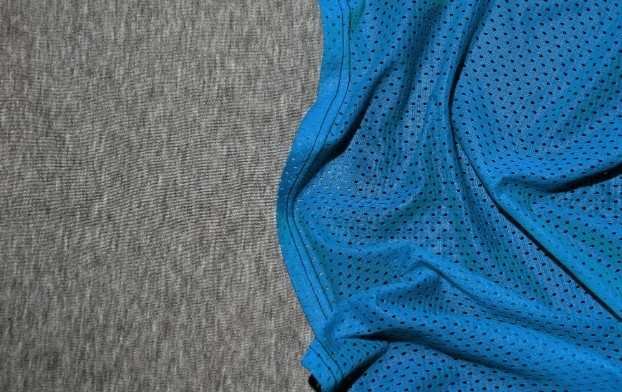
Sports jerseys are usually made from polyester or other performance fabrics. These materials are lightweight and breathable, but they can trap sweat, body odor, deodorant marks, and food stains if they are not cleaned properly.
The bigger concern is the decoration on the jersey, such as printed numbers, names, logos, and patches, which require gentle care to prevent cracking or peeling. The best jersey fabrics for warm weather are moisture-wicking polyester blends that promote airflow, dry quickly, and help keep players cool and comfortable during practices and games.
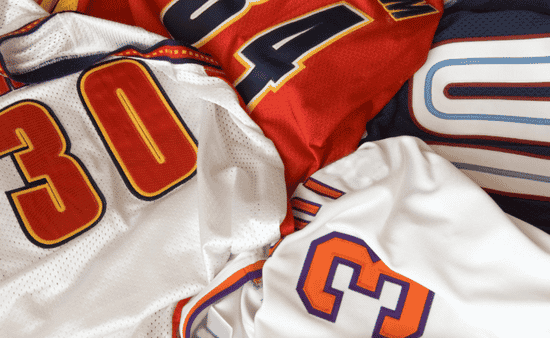
Many jerseys have heat-pressed numbers, vinyl letters, embroidered patches, sponsor logos, mesh panels, or stitched nameplates. These details can crack, peel, fade, or loosen when exposed to hot water, harsh detergent, bleach, fabric softener, or dryer heat. That is why a simple care routine can make a big difference.
Check the Care Label First
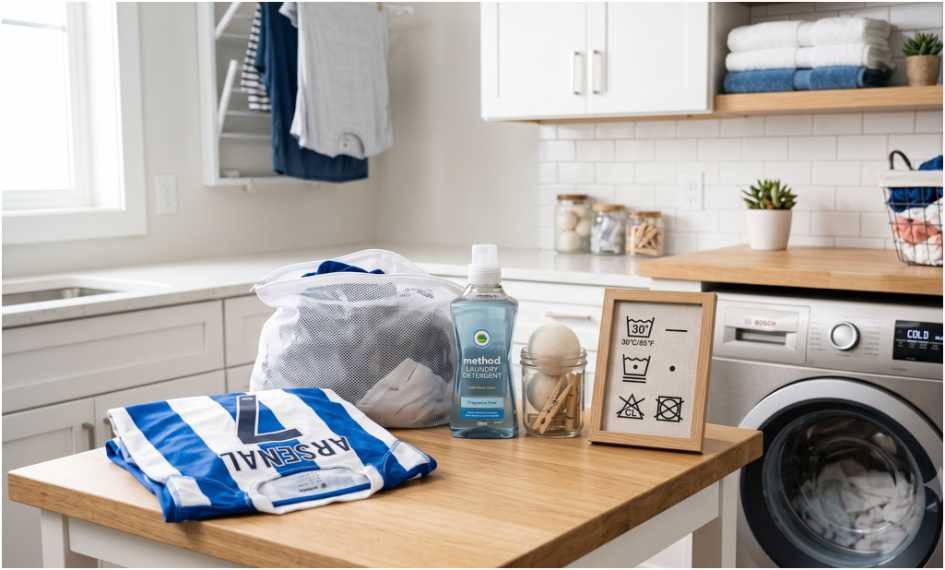
Before washing any jersey, always read the care label. It tells you the safest washing machine temperature, drying method, and fabric instructions. Some jerseys are fine in a washing machine, while others need hand washing or extra care because of delicate graphics or stitching.
If the label says cold wash, avoid warm water. If it says hang dry, do not use the dryer. These instructions are there to prevent shrinking, fading, and damage to letters or logos.
Turn the Jersey Inside Out

One of the easiest ways to protect a jersey is to turn it inside out before washing. This keeps numbers, names, patches, and printed logos from rubbing against the washer drum or other clothes.
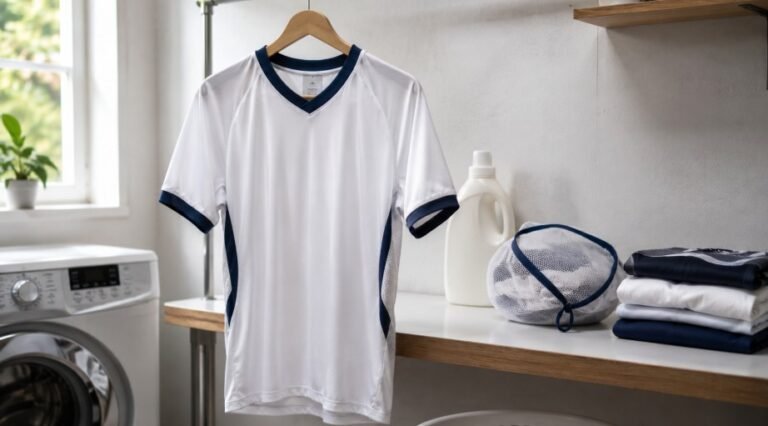
You should also avoid washing jerseys with jeans, towels, hoodies, jackets, or clothes with zippers. Rough fabrics and hard details can scrape the jersey surface and make it look older faster. For extra protection, place the jersey in a mesh laundry bag.
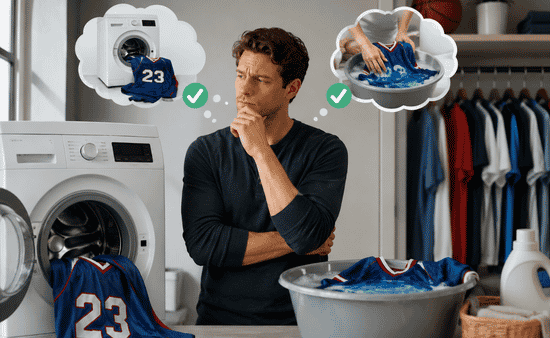
If you’re wondering, can you wash sports jerseys in a washing machine? The answer is yes—as long as you use a gentle cycle, cold water, and a mild detergent while following the care label instructions to help preserve the fabric, colors, and printed graphics.
Use Cold Water and Gentle Wash Settings
Cold water is the safest option for most sports jerseys. It helps protect bright colors and reduces the risk of shrinking. Hot water can weaken adhesives, fade fabric, and damage heat-pressed designs.
Use a gentle cycle with a low spin setting. A rough wash cycle may stretch the jersey or stress the stitching. If the jersey is expensive, signed, vintage, or collectible, hand washing is often the safest choice. Fill a clean sink with cold water, add a small amount of mild detergent, and gently move the jersey through the water.
Choose Mild Detergent
A mild detergent is best for jersey care. Strong detergents may be too harsh for printed graphics and performance fabric. Do not use too much detergent because leftover residue can make the jersey feel stiff and trap odor.
If the jersey smells sweaty, soak it briefly in cold water before washing. You can also use a sports-safe detergent for odor control. Avoid long soaking times for jerseys with printed numbers or delicate logos.
Avoid Bleach and Fabric Softener

Bleach can ruin jersey colors and weaken the fabric. Even white jerseys should be treated carefully with a mild stain remover instead of harsh bleach. Bleach may also damage logos, nameplates, and patches.
Fabric softener is another common mistake. It can coat performance fibers and reduce breathability. It may also leave buildup that traps odor. If you want the jersey to smell fresh, focus on proper washing and complete drying instead of covering odors with fragrance.
Treat Stains Before Washing
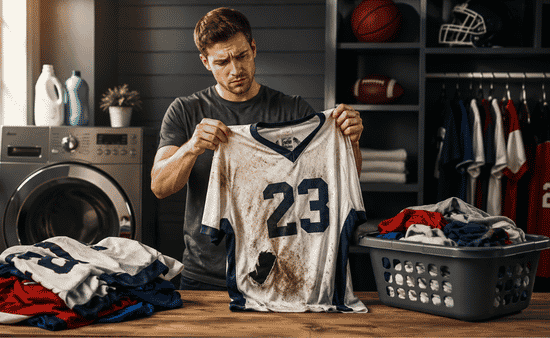
Game-day stains are common. Jerseys can pick up sweat, grass, dirt, food, soda, sunscreen, deodorant, and sauce marks. The faster you treat a stain, the better your chance of removing it.
Start with cold water. Gently blot the stain instead of rubbing it hard. Apply a small amount of mild detergent or stain remover to the affected area and let it sit for a few minutes. For dirt or grass stains, use a soft toothbrush lightly. For deodorant marks, dampen the area and gently work in detergent.
Never put a stained jersey in the dryer. Heat can set the stain and make it harder to remove.
Air Dry Instead of Using Heat
Dryer heat is one of the biggest reasons jerseys lose their fresh look. High heat can shrink the fabric, crack numbers, loosen glue, and damage printed details, which is why methods used to shrink a shirt on purpose should never be applied to jerseys. Air drying is always the better choice.
Lay the jersey flat on a clean towel or hang it on a padded hanger. Keep it away from direct sunlight, heaters, radiators, and hot surfaces. Sunlight can fade colors, while heat can damage lettering and logos. Make sure the jersey is fully dry before storing it because damp fabric can cause odor or mildew.
Protect Letters, Numbers, and Logos

Letters and numbers often show damage before the rest of the jersey. To protect them, wash the jersey inside out, use cold water, choose a gentle cycle, and avoid the dryer.
Do not iron directly over printed graphics. If the jersey is wrinkled, use a steamer from a safe distance or place a thin cloth between the iron and the jersey on the lowest heat setting. Avoid folding the jersey directly across numbers or logos because repeated creasing can cause cracks.
Store Jerseys the Right Way
Good storage helps jerseys stay clean, fresh, and ready to wear. Keep them in a cool, dry place away from sunlight. Use breathable garment bags instead of plastic bags because plastic can trap moisture.
For everyday jerseys, padded hangers help maintain shape. For heavy, vintage, or collectible jerseys, folding may be safer, but avoid sharp folds across numbers or patches. Signed jerseys should be handled carefully and washed only when absolutely necessary.
Frequently Asked Questions
1. What is the best way for how to keep sports jerseys looking new?
The best way is to wash with cold water, use mild detergent, turn the jersey inside out, air dry it, treat stains early, and store it properly.
2. Can I put a sports jersey in the dryer?
It is better to avoid the dryer because heat can shrink the fabric and damage printed letters, numbers, and logos.
3. How do I stop jersey numbers from peeling?
Wash the jersey inside out, avoid hot water, skip dryer heat, and never iron directly over the numbers.
4. Should I wash jerseys after every wear?
Wash jerseys after sweaty or stained use. If you only wore one lightly, air it out before washing.
Final Thoughts
I always think a good jersey is more than just fan clothing. It can remind you of a favorite team, a big game, a memorable season, or a player you admire. That is why it deserves better care than ordinary laundry.
Once you know how to keep sports jerseys looking new, the routine becomes simple. Wash gently, avoid heat, treat stains quickly, protect the graphics, and store each jersey carefully. With the right habits, your favorite jersey can stay sharp, clean, and game-day ready for years.